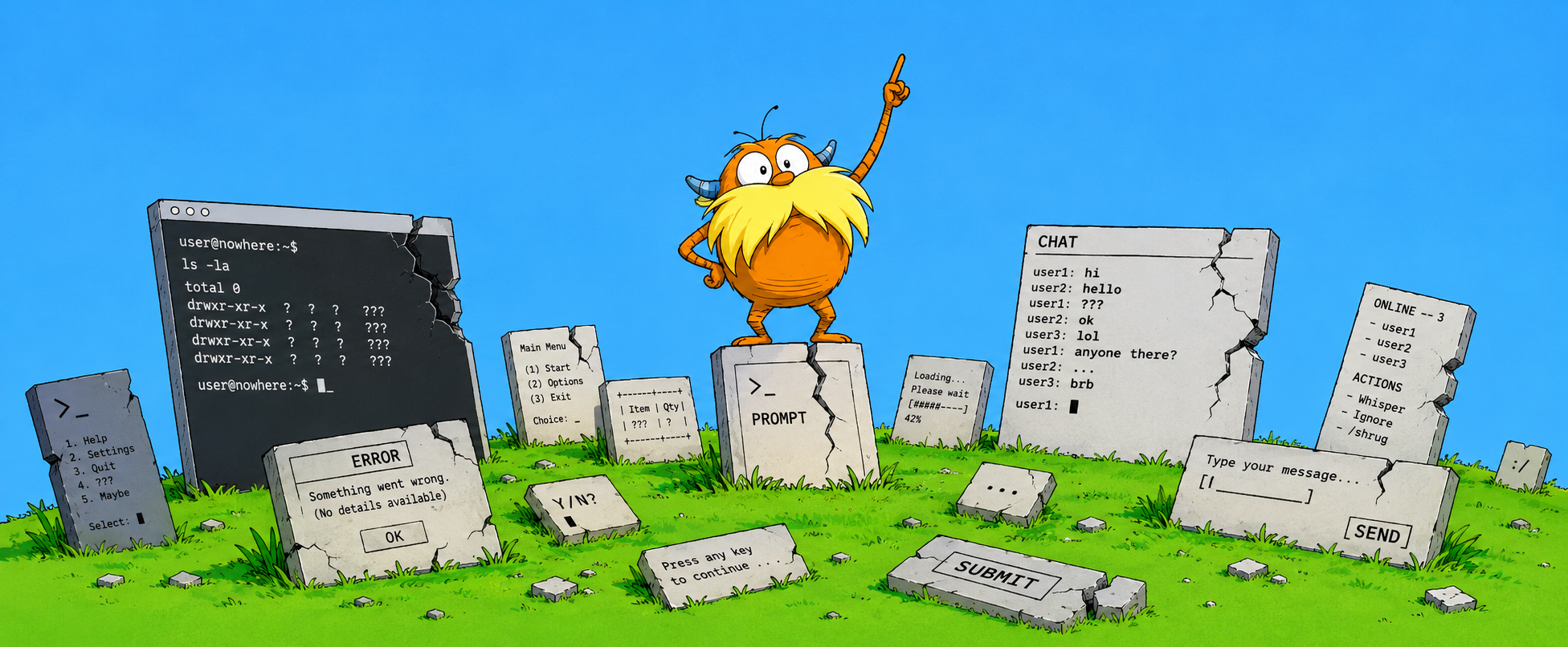
We’re not dead yet. And, it’s time to speak up.
I’ve built a small tool for managing ChatGPT Projects. Not because I fancied having another side project — they are legion — but because I got tired of not being able to do very basic things with them.
Basic things like: search… sort… organise… find the thing I know I made three weeks ago without scrolling through a sidebar like I’m rifling through a drawer full of cables. You know the drawer.
It’s 2026. We’ve got decades of UX behind us. This shouldn’t feel radical. It should feel obvious.
GPTool started simply enough. Collect my ChatGPT projects. Keep a local snapshot. Show them in a usable list. Let me switch between ChatGPT’s default ordering and something more sensible when I need it.
Then it grew a bit, because useful things do. An in-page launcher. Diagnostics because browser DOMs are silly. Exporting. Accessibility. Local organisation.
A lightweight MVC framework to organise all the events and avoid pulling in libraries and their accompanying security risk…
Oh my.
Well, it’s only been a couple of days. The tools help.
But this isn’t really a post about features. It’s about how strange it feels to be in a moment where everybody is being told software can now be generated on demand, while many of the tools we rely on are still missing the quiet, boring things that make work manageable.
There’s a whole generation of designers and UX people who spent years asking annoying questions like:
- Where does this live?
- What happens when there are fifty of them, not five?
- How will someone remember what they called this?
- What does the user do when the system half works?
- Why is this a conversation?
Someone at Google once confided in me that UX people weren’t embedded in teams in quite the way I’d expected. It was a while ago, but late enough that it stuck with me and keeps being relevant. It hinted at something we’ve all seen elsewhere. When technical teams move quickly, the experience can become something that happens afterwards. Or worse, something that’s assumed to emerge naturally from engineering taste.
Like text-based interfaces.
That matters because we’re all increasingly at the mercy of a few very large platforms. Their product decisions become the rooms we work in. If they decide everything is a feed, we scroll. If they decide everything is a chat, we chat. If they forget that people need to search, sort, file, compare, and return, then all of us inherit the mess.
I like conversations. Obviously. Here’s one. But we invented paper for a reason.
Lists, folders, shelves, labels, tabs, bookmarks, margins, notes in the corner. These are not primitive artefacts waiting to be replaced by chat. They’re human technologies for holding thought still long enough to return to it later. They’re powerful mnemonic devices that package information. Like a little brain Zip file.
That’s the thing UX people have always understood. It’s not just making things pretty at the end. Not “making the button blue”. The deeper skill is recognising the shape of the work and giving it an interface that respects how people actually think, forget, search, return, compare, and organise. Feel.
AI makes that skill more important, not less, because, well, it can’t. Feel.
Yet.
When a tool can generate more work, more drafts, more projects, more variations, and more half-finished ideas, the organisational layer becomes critical. Without it, abundance becomes mess. The model may be clever, but the experience becomes another junk drawer.
Keep my environment organised. I’ve got enough context switching to do. No?
So, i’ve taken the task upon myself and done this:
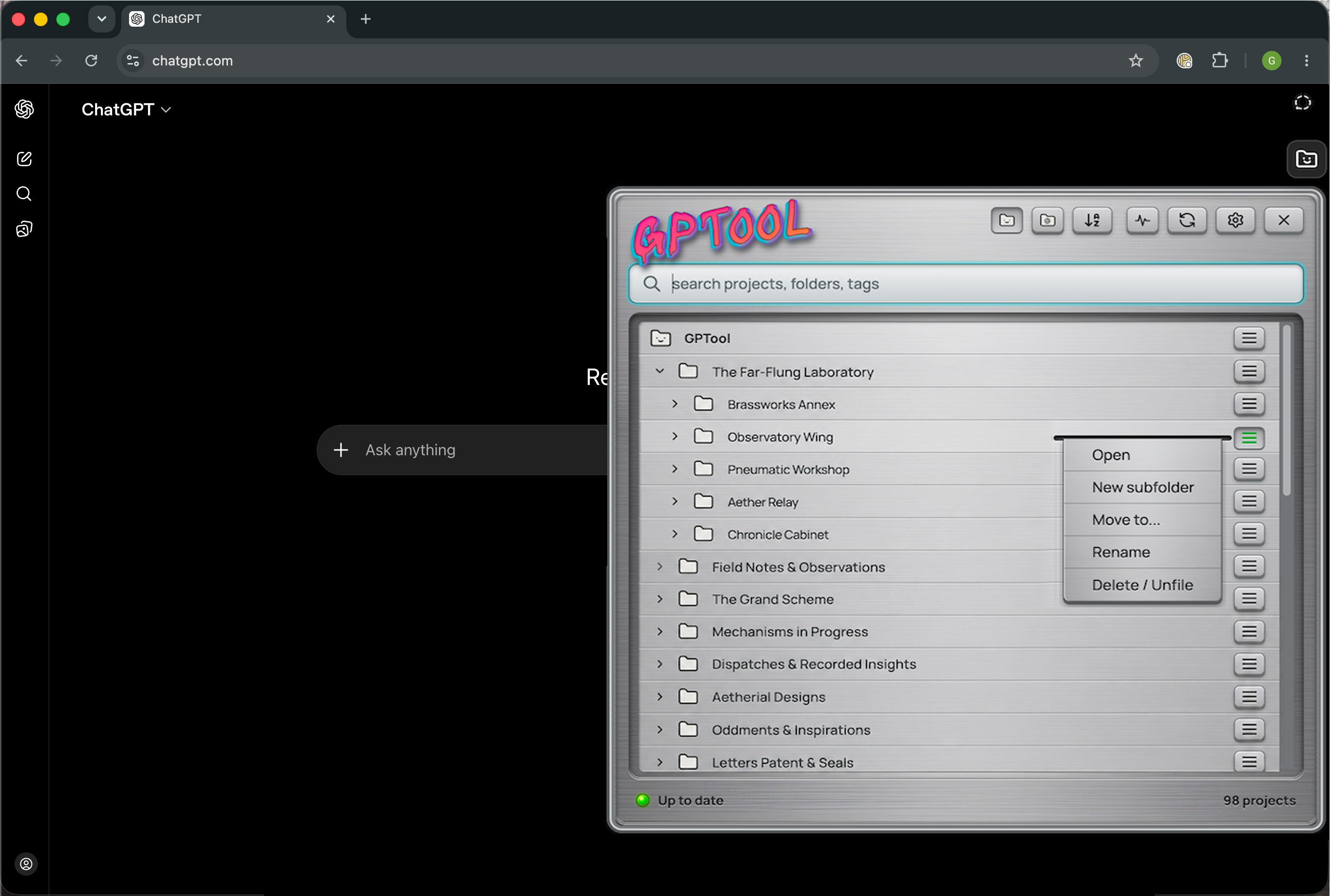
Security matters here too. The tool keeps things local. It doesn’t call out anywhere to fetch libraries or send data. It’s open source, because “trust me” isn’t a serious security model.
More features will come. Maybe. Hopefully, they just fix the experience.
Where doe the product and design budgets go?
But this short post isn’t about product features, it’s really a small salute to the UX people.
We’re not dead yet.
In fact, as AI tools spread through every corner of work, we’re going to need more of the old design instincts, not fewer.
And it won’t just be designers. Data scientists eventually have to go beyond tables. Data engineers are being asked to make and manage dashboards. Engineers have to go beyond the prompt box. Product people have to go beyond the demo.
The job isn’t going away. It’s now about bridging the gap between generated capability and usable, organised, secure, human work.
Get to it.